COMPOSITION DIRECTIONS FOR AI CREATORS
COMPOSITION LAB
Explore cinematic composition techniques for AI images and video. Preview shot composition structures and copy ready-to-use prompts for stronger framing.
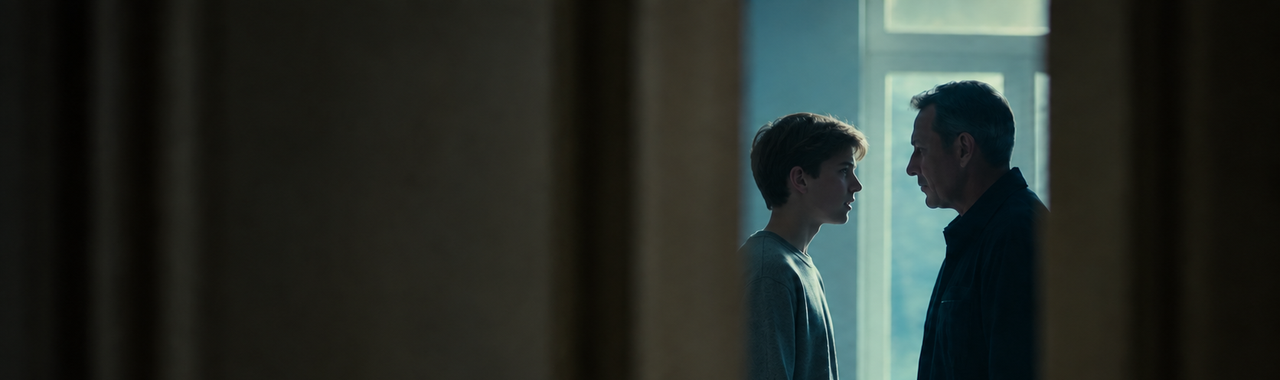
Explore cinematic composition techniques for AI images and video. Preview shot composition structures and copy ready-to-use prompts for stronger framing.
Cinematic composition is the way subjects, space, lines and visual weight are arranged inside a frame to guide attention and support the story. Composition Lab lets you preview these structures and copy a composition prompt for AI images or video.
Common cinematic composition techniques include the rule of thirds, central framing, symmetry, leading lines, negative space, layered depth, vanishing point, dirty framing and other ways of controlling subject placement and visual balance.
The rule of thirds divides the frame into a three-by-three grid and places important subjects near the grid lines or intersections. It is a useful starting point for balanced film composition, but it is a guide rather than a rule that every shot must follow.
Leading lines use roads, walls, architecture, shadows or other directional elements to pull the viewer’s eye toward a subject or focal point. In AI prompts, describing where those lines begin and where they lead can make the intended shot composition clearer.
Symmetry organizes visual elements around a central axis, creating a controlled and deliberate frame. It can make a subject feel formal, powerful, calm or visually precise depending on the scene and camera position.
Negative space is the intentionally open area around a subject. It can isolate the subject, create tension, leave room for movement or emphasize scale. A good composition prompt should describe both the subject position and the space that must remain open.
Foreground elements create separation between the camera, subject and background. This layered depth can make a flat frame feel more dimensional and can also create a dirty-frame effect when an object partially blocks the edge of the shot.
For AI images, shot composition techniques describe where subjects sit in the frame, how much space surrounds them, what leads the eye and how foreground, midground and background elements relate. Composition Lab turns these directions into prompts you can adapt to your image workflow.
Yes. The composition prompts describe framing and spatial relationships that can be used as a starting point for both AI images and AI video. For motion-specific direction, you can combine them with Camera Movement or build a fuller scene in Video Prompt Builder.
Framing describes what the camera includes or excludes and how the shot is bounded. Composition is broader: it covers how every visible element is arranged inside that frame, including subject position, balance, lines, depth and empty space.
A close-up may prioritize eye position, headroom and negative space, while a wide shot may depend more on environment, scale, leading lines and layered depth. The useful composition technique depends on what the shot needs the viewer to notice first.
Common problems include accidental empty space, awkward edge crops, unclear focal points, competing subjects and background elements that merge with the subject. Using a defined composition system before generating can make the intended frame easier to communicate.